


Сall us today
+30.2103230345
My account
Login
Register
- Byzantine Icons
- BeesWax and Incense Icons
- Byzantine Aluminium Icons
- Byzantine Silver Plated Icons
- Framed Glass Holy Icons
- Hand Carved Icons
- Hand Made Enamel Icons
- Hand Made Icons of Christ
- Hand Made Icons of Holy Virgin Mary
- Hand Made Icons of Saints
- Hand Painted Byzantine Icons
- Hand Painted Icons Special Orders
- Icon Display Stands
- Iconostasis with Electric Lamp
- Laminated Holy Icons
- Orthodox Annual Agiologion
- Orthodox Crystal & Glass Icons
- Orthodox Pin Button Icons
- Silver Byzantine Icons
- No.1055
- No.1057 Size: 34.5 x 42cm
- No.1058 Size:31x35cm
- No.1060 Size: 26.5cm x 33cm
- No.1062 Size: 24cm x 28cm
- No.1064 Size: 21 x 26cm
- No.1065 Size: 25cm x 31cm
- No.1068 Size:22x27cm
- No.1073 Size: 23cm x 27cm
- No.1075 Size : 19cm x 24cm
- No.1078 Size: 16cm x 22cm
- No.1082 Size: 14cm x 18cm
- No.1083 Size: 13cm x 16cm
- No.M1183 Size: 14.5 x 11.5cm
- Silver Classical Collection Icons
- Wedding Crowns & Cases
- Wooden Antique Style Icons
- Wooden Byzantine Icons
- Wooden Diptychs & Triptychs
- Wooden Iconostasis
- Wooden Icons with Glass Oil Cup
- Wooden NeoClassical Icons
- Wooden Russian Style Icons
- Mosaic Hand Made Holy Icons
- Candle Stands
- Cemetery Funeral Products
- Church Supplies
- Andidoron Bowls
- Anointing Oil Bottles
- Baptismal Fonts
- Candelabra Ventilated
- Candle Cases & Coin Boxes
- Cement ReadyMade Church
- Chains and Gift Boxes for Englolpion Sets
- Chanter Psalter Stands
- Cherubims Exapterigo
- Church Candle Recycle Box
- Church Chairs & Throns
- Church Corridor Columns
- Church Orthodox Bells
- Church Supplies upon Request
- Crosiers – Bishop Stuff
- Ecclesiastical Alouminium Chandelier
- Ecclesiastical Candelabrum
- Ecclesiastical Censers
- Ecclesiastical Icon Stands
- Ecclesiastical Lanterns
- Ecclesiastical Special Cases
- Ecclesiastical Vase
- Ecclesiastical Vigil Oil Candles
- Ecclesiastical Zeon & Sprinkler
- Engolpion Panagia Sets
- Epitaph Kouvouklion
- Holy Apostle Cover
- Holy Communion Chalice Set
- Holy Communion Wine
- Holy Gospel Book Covers
- Holy Oil Bowls
- Holy Table Oil Candles
- Holy Table Tabernacle
- Lances – Spears for Holy Communion
- Monastic Talanton
- Orthodox Church Sconces
- Orthodox Gospel Metal Stands
- Ostrich Orthodox Decorated Egg
- Pectoral Crosses
- Reliquaries Boxes
- Tables for Church
- WoodCarved Candelabrum
- WoodCarved Chairs – Stalls
- Ecclesiastical Electric Lamps
- Ex-Voto Tamata Milagros
- Incense Burners & Orthodox Incense
- Alouminium Incense Burners
- Ceramic Incense Burners
- Holy Oil Frangrance
- Home Brass Incense Burners
- Incense Athonite
- Incense Coal
- Incense Incesco Catholic
- Incense Metal Boxes
- Incense Natural & Resins
- Incense Orthodox
- Incense Premium Athonite
- Incense Wooden boxes
- Metal Tongs for Incense
- Porcelain Incense Burners
- Orthodox CD & Book Library
- Orthodox Crosses
- Orthodox Gifts
- Gifts for the New Year
- 2024 Paschal & Church Candles
- Orthodox Calendars
- Aladdin Lamps
- Bookmarks
- Ceramic & Crystal Gifts
- Easter Coloring Dye for Eggs
- Ecclesiastical Colognes
- Gold Eye Pentants
- Holy Water Bottles
- Key Rings
- Lanterns
- Martirika
- Orthodox Car & Gifts Pendants
- Orthodox Cross Gold K14
- Orthodox Filakto
- Orthodox Icons Magnets
- Orthodox Neckwear Crosses & Icons
- Praying Ropes
- Praying Rozaries
- Prosphora Seals
- Silver 925 Car Medallions
- Silver 925 Chains
- Silver 925 Orthodox Crosses
- Silver 925 Orthodox Pendants
- Orthodox Silver 925 Rings
- Silver 925 Russian Crosses
- Small Gospel Pendants
- Traditional Blue Eyes
- Various Small Icons
- Wax Healing Creams
- Wooden NeckWear Crosses
- Vestments, Traditional Costumes & Church Linens
- Baptism Clothing
- Clerics Hats
- Covers Of The Holy Grail
- Ecclesiastical Ribbons
- Epitaph Cover Koimesis
- Epitaph Covers Mourners
- Holy Communion Cup Covers
- Holy Communion Purificators & Accessories
- Iconostasis Orthodox Cover
- Orthodox Antimension
- Orthodox Belts
- Orthodox Cotton Cases and More
- Orthodox Cufflinks
- Orthodox Flags & Banners
- Orthodox Greek Flag With Holy Icons
- Rassa – Anteri
- Shroud
- Velvet Orthodox Garment & Prayers
- Vestment Embroidery Derocations
- Vestment Fabrics
- Vestments for Altar Boy
- Vigil Oil Candles
- Show more
Menu
Categories
- Vigil Oil Candles
- Vestments, Traditional Costumes & Church Linens
- Orthodox Greek Flag With Holy Icons
- Baptism Clothing
- Holy Communion Cup Covers
- Epitaph Cover Koimesis
- Iconostasis Orthodox Cover
- Vestment Embroidery Derocations
- Orthodox Belts
- Ecclesiastical Ribbons
- Shroud
- Orthodox Cotton Cases and More
- Orthodox Cufflinks
- Epitaph Covers Mourners
- Orthodox Antimension
- Holy Communion Purificators & Accessories
- Vestments for Altar Boy
- Covers Of The Holy Grail
- Velvet Orthodox Garment & Prayers
- Orthodox Flags & Banners
- Clerics Hats
- Vestment Fabrics
- Rassa - Anteri
- Orthodox Gifts
- Silver 925 Russian Crosses
- Gifts for the New Year
- Wax Healing Creams
- Silver 925 Orthodox Pendants
- Bookmarks
- Orthodox Icons Magnets
- Orthodox Silver 925 Rings
- Small Gospel Pendants
- Easter Coloring Dye for Eggs
- Holy Water Bottles
- Silver 925 Car Medallions
- Ceramic & Crystal Gifts
- Praying Rozaries
- Martirika
- Silver 925 Orthodox Crosses
- Gold Eye Pentants
- Orthodox Cross Gold K14
- Ecclesiastical Colognes
- Silver 925 Chains
- Orthodox Filakto
- Traditional Blue Eyes
- Orthodox Neckwear Crosses & Icons
- Wooden NeckWear Crosses
- Key Rings
- Various Small Icons
- Prosphora Seals
- Aladdin Lamps
- Lanterns
- Orthodox Calendars
- Praying Ropes
- 2026 Collection Paschal & Church Candles
- Orthodox Car & Gifts Pendants
- Orthodox Crosses
- Orthodox CD & Book Library
- Incense Burners & Orthodox Incense
- Incense Wooden boxes
- Metal Tongs for Incense
- Porcelain Incense Burners
- Incense Athonite
- Incense Incesco Catholic
- Incense Natural & Resins
- Incense Premium Athonite
- Holy Oil Frangrance
- Alouminium Incense Burners
- Ceramic Incense Burners
- Incense Coal
- Incense Orthodox
- Incense Metal Boxes
- Home Brass Incense Burners
- Ex-Voto Tamata Milagros
- Church Supplies
- Ecclesiastical Electric Lamps
- Cherubims Exapterigo
- Ecclesiastical Censers
- Holy Communion Chalice Set
- Holy Gospel Book Covers
- Ecclesiastical Special Cases
- Church Supplies upon Request
- Pectoral Crosses
- Engolpion Panagia Sets
- Chains and Gift Boxes for Englolpion Sets
- Anointing Oil Bottles
- Lances - Spears for Holy Communion
- Andidoron Bowls
- Reliquaries Boxes
- Church Orthodox Bells
- Holy Communion Wine
- Candle Cases & Coin Boxes
- Ecclesiastical Candelabrum
- Ecclesiastical Zeon & Sprinkler
- Holy Apostle Cover
- Baptismal Fonts
- Ostrich Orthodox Decorated Egg
- Orthodox Church Sconces
- Orthodox Gospel Metal Stands
- Crosiers - Bishop Stuff
- WoodCarved Candelabrum
- Epitaph Kouvouklion
- Ecclesiastical Icon Stands
- Ecclesiastical Lanterns
- Ecclesiastical Alouminium Chandelier
- Church Corridor Columns
- Chanter Psalter Stands
- Monastic Talanton
- Holy Table Tabernacle
- Ecclesiastical Vase
- Ecclesiastical Vigil Oil Candles
- Church Candle Recycle Box
- Holy Oil Bowls
- Candelabra Ventilated
- Tables for Church
- Church Chairs & Throns
- Cement ReadyMade Church
- WoodCarved Chairs - Stalls
- Holy Table Oil Candles
- Cemetery Funeral Products
- Candle Stands
- Byzantine Icons
- Mosaic Hand Made Holy Icons
- Orthodox Annual Agiologion
- Framed Glass Holy Icons
- Orthodox Pin Button Icons
- Hand Painted Byzantine Icons
- Hand Made Icons of Christ
- Silver Byzantine Icons
- No.1055
- No.1082 Size: 14cm x 18cm
- No.1065 Size: 25cm x 31cm
- No.1060 Size: 26.5cm x 33cm
- No.1073 Size: 23cm x 27cm
- No.1083 Size: 13cm x 16cm
- No.1078 Size: 16cm x 22cm
- No.1075 Size : 19cm x 24cm
- No.M1183 Size: 14.5 x 11.5cm
- No.1064 Size: 21 x 26cm
- No.1057 Size: 34.5 x 42cm
- No.1058 Size:31x35cm
- No.1068 Size:22x27cm
- No.1062 Size: 24cm x 28cm
- Wooden NeoClassical Icons
- Wooden Byzantine Icons
- Hand Painted Icons Special Orders
- Hand Made Icons of Saints
- Hand Made Icons of Holy Virgin Mary
- Byzantine Silver Plated Icons
- Laminated Holy Icons
- BeesWax and Incense Icons
- Wooden Russian Style Icons
- Hand Made Enamel Icons
- Byzantine Aluminium Icons
- Silver Classical Collection Icons
- Wooden Icons with Glass Oil Cup
- Icon Display Stands
- Orthodox Crystal & Glass Icons
- Iconostasis with Electric Lamp
- Wooden Iconostasis
- Hand Carved Icons
- Wooden Diptychs & Triptychs
- Wedding Crowns & Cases
- Wooden Antique Style Icons
Wishlist
0
Cart
2

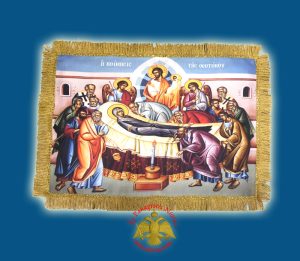
Dormition of Theotokos Canvas Print from Greek Monasteries Theme 50x70cm
SKU: 6550-51_Dormition $159.71
Dormition of Theotokos Holy Virgin Mary Orthodox Print on Canvas
With Golden Tassel and Red Linen Fabric in the Back
Made in Greece

Epitaph Cover Dormition Koimesis of Theotokos Flower Golden Thread Embroidery 50x70cm
SKU: 6552-10_12260 $760.86
Εpitaphios or epitaphion is a very important representation in our Greek Orthodox Religion. Today most often found as a large cloth, embroidered and often richly adorned, which is used during the services of Great Friday and Holy Saturday in the Eastern Orthodox Churches and those Eastern Catholic Churches which follow the Byzantine rite.
The icon depicts Christ after he has been removed from the cross, lying supine, as his body is being prepared for burial. The scene is taken from the Gospel of St. John (John 19:38-42). Shown around him, and mourning his death, may be his mother (the Theotokos
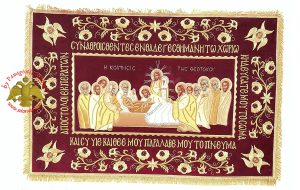
Epitaph Cover Dormition Koimesis of Theotokos Flower Golden Thread Embroidery 50x70cm
SKU: 6552-10_12261 $765.97
Εpitaphios or epitaphion is a very important representation in our Greek Orthodox Religion. Today most often found as a large cloth, embroidered and often richly adorned, which is used during the services of Great Friday and Holy Saturday in the Eastern Orthodox Churches and those Eastern Catholic Churches which follow the Byzantine rite.
The icon depicts Christ after he has been removed from the cross, lying supine, as his body is being prepared for burial. The scene is taken from the Gospel of St. John (John 19:38-42). Shown around him, and mourning his death, may be his mother (the Theotokos
Epitaph Cover Dormition Koimesis of Theotokos Flower Golden Thread Embroidery 60x90cm
SKU: 6552-10_12260 $1,016.39
Εpitaphios or epitaphion is a very important representation in our Greek Orthodox Religion. Today most often found as a large cloth, embroidered and often richly adorned, which is used during the services of Great Friday and Holy Saturday in the Eastern Orthodox Churches and those Eastern Catholic Churches which follow the Byzantine rite.
The icon depicts Christ after he has been removed from the cross, lying supine, as his body is being prepared for burial. The scene is taken from the Gospel of St. John (John 19:38-42). Shown around him, and mourning his death, may be his mother (the Theotokos
Epitaph Cover Dormition Koimesis of Theotokos Flower Golden Thread Embroidery 60x90cm
SKU: 6552-10_12261 $1,021.50
Εpitaphios or epitaphion is a very important representation in our Greek Orthodox Religion. Today most often found as a large cloth, embroidered and often richly adorned, which is used during the services of Great Friday and Holy Saturday in the Eastern Orthodox Churches and those Eastern Catholic Churches which follow the Byzantine rite.
The icon depicts Christ after he has been removed from the cross, lying supine, as his body is being prepared for burial. The scene is taken from the Gospel of St. John (John 19:38-42). Shown around him, and mourning his death, may be his mother (the Theotokos

Epitaph Cover Dormition Koimesis of Theotokos Flower Golden Thread Embroidery 65x100cm
SKU: 6552-10_12262 $1,085.39
Εpitaphios or epitaphion is a very important representation in our Greek Orthodox Religion. Today most often found as a large cloth, embroidered and often richly adorned, which is used during the services of Great Friday and Holy Saturday in the Eastern Orthodox Churches and those Eastern Catholic Churches which follow the Byzantine rite.
The icon depicts Christ after he has been removed from the cross, lying supine, as his body is being prepared for burial. The scene is taken from the Gospel of St. John (John 19:38-42). Shown around him, and mourning his death, may be his mother (the Theotokos

Epitaph Cover Dormition Koimesis of Theotokos Flower Golden Thread Embroidery 80x120cm
SKU: 6552-10_12263 $2,172.05
Εpitaphios or epitaphion is a very important representation in our Greek Orthodox Religion. Today most often found as a large cloth, embroidered and often richly adorned, which is used during the services of Great Friday and Holy Saturday in the Eastern Orthodox Churches and those Eastern Catholic Churches which follow the Byzantine rite.
The icon depicts Christ after he has been removed from the cross, lying supine, as his body is being prepared for burial. The scene is taken from the Gospel of St. John (John 19:38-42). Shown around him, and mourning his death, may be his mother (the Theotokos

Epitaph Cover Dormition Koimesis of Theotokos Gold Thread Embroidery 50x70cm
SKU: 6552-10_12264 $1,054.08
Εpitaphios or epitaphion is a very important representation in our Greek Orthodox Religion. Today most often found as a large cloth, embroidered and often richly adorned, which is used during the services of Great Friday and Holy Saturday in the Eastern Orthodox Churches and those Eastern Catholic Churches which follow the Byzantine rite.
The icon depicts Christ after he has been removed from the cross, lying supine, as his body is being prepared for burial. The scene is taken from the Gospel of St. John (John 19:38-42). Shown around him, and mourning his death, may be his mother (the Theotokos
Epitaph Cover Dormition Koimesis of Theotokos Gold Thread Embroidery 60x90cm
SKU: 6552-10_12264 $1,181.85
Εpitaphios or epitaphion is a very important representation in our Greek Orthodox Religion. Today most often found as a large cloth, embroidered and often richly adorned, which is used during the services of Great Friday and Holy Saturday in the Eastern Orthodox Churches and those Eastern Catholic Churches which follow the Byzantine rite.
The icon depicts Christ after he has been removed from the cross, lying supine, as his body is being prepared for burial. The scene is taken from the Gospel of St. John (John 19:38-42). Shown around him, and mourning his death, may be his mother (the Theotokos
Epitaph Cover Dormition Koimesis of Theotokos Gold Thread Embroidery 65x100cm
SKU: 6552-10_12264 $1,309.62
Εpitaphios or epitaphion is a very important representation in our Greek Orthodox Religion. Today most often found as a large cloth, embroidered and often richly adorned, which is used during the services of Great Friday and Holy Saturday in the Eastern Orthodox Churches and those Eastern Catholic Churches which follow the Byzantine rite.
The icon depicts Christ after he has been removed from the cross, lying supine, as his body is being prepared for burial. The scene is taken from the Gospel of St. John (John 19:38-42). Shown around him, and mourning his death, may be his mother (the Theotokos

Epitaph Cover Dormition Koimesis of Theotokos With Golden Thread Embroidery 50x70cm
SKU: 6552-10_12257 $702.08
Εpitaphios or epitaphion is a very important representation in our Greek Orthodox Religion. Today most often found as a large cloth, embroidered and often richly adorned, which is used during the services of Great Friday and Holy Saturday in the Eastern Orthodox Churches and those Eastern Catholic Churches which follow the Byzantine rite.
The icon depicts Christ after he has been removed from the cross, lying supine, as his body is being prepared for burial. The scene is taken from the Gospel of St. John (John 19:38-42). Shown around him, and mourning his death, may be his mother (the Theotokos

Epitaph Cover Dormition Koimesis of Theotokos With Golden Thread Embroidery 50x70cm
SKU: 6552-10_12259 $543.65
Εpitaphios or epitaphion is a very important representation in our Greek Orthodox Religion. Today most often found as a large cloth, embroidered and often richly adorned, which is used during the services of Great Friday and Holy Saturday in the Eastern Orthodox Churches and those Eastern Catholic Churches which follow the Byzantine rite.
The icon depicts Christ after he has been removed from the cross, lying supine, as his body is being prepared for burial. The scene is taken from the Gospel of St. John (John 19:38-42). Shown around him, and mourning his death, may be his mother (the Theotokos
Epitaph Cover Dormition Koimesis of Theotokos With Golden Thread Embroidery 60x90cm
SKU: 6552-10_12257 $829.85
Εpitaphios or epitaphion is a very important representation in our Greek Orthodox Religion. Today most often found as a large cloth, embroidered and often richly adorned, which is used during the services of Great Friday and Holy Saturday in the Eastern Orthodox Churches and those Eastern Catholic Churches which follow the Byzantine rite.
The icon depicts Christ after he has been removed from the cross, lying supine, as his body is being prepared for burial. The scene is taken from the Gospel of St. John (John 19:38-42). Shown around him, and mourning his death, may be his mother (the Theotokos
Epitaph Cover Dormition Koimesis of Theotokos With Golden Thread Embroidery 60x90cm
SKU: 6552-10_12259 $607.54
Εpitaphios or epitaphion is a very important representation in our Greek Orthodox Religion. Today most often found as a large cloth, embroidered and often richly adorned, which is used during the services of Great Friday and Holy Saturday in the Eastern Orthodox Churches and those Eastern Catholic Churches which follow the Byzantine rite.
The icon depicts Christ after he has been removed from the cross, lying supine, as his body is being prepared for burial. The scene is taken from the Gospel of St. John (John 19:38-42). Shown around him, and mourning his death, may be his mother (the Theotokos
Epitaph Cover Dormition Koimesis of Theotokos With Golden Thread Embroidery 65x100cm
SKU: 6552-10_12257 $893.74
Εpitaphios or epitaphion is a very important representation in our Greek Orthodox Religion. Today most often found as a large cloth, embroidered and often richly adorned, which is used during the services of Great Friday and Holy Saturday in the Eastern Orthodox Churches and those Eastern Catholic Churches which follow the Byzantine rite.
The icon depicts Christ after he has been removed from the cross, lying supine, as his body is being prepared for burial. The scene is taken from the Gospel of St. John (John 19:38-42). Shown around him, and mourning his death, may be his mother (the Theotokos
Epitaph Cover Dormition Koimesis of Theotokos With Golden Thread Embroidery 65x100cm
SKU: 6552-10_12259 $671.42
Εpitaphios or epitaphion is a very important representation in our Greek Orthodox Religion. Today most often found as a large cloth, embroidered and often richly adorned, which is used during the services of Great Friday and Holy Saturday in the Eastern Orthodox Churches and those Eastern Catholic Churches which follow the Byzantine rite.
The icon depicts Christ after he has been removed from the cross, lying supine, as his body is being prepared for burial. The scene is taken from the Gospel of St. John (John 19:38-42). Shown around him, and mourning his death, may be his mother (the Theotokos
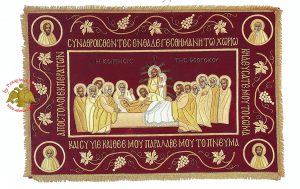
Epitaph Cover Dormition Koimesis of Theotokos With Golden Thread Full Embroidery 50x70cm
SKU: 6552-10_12258 $702.08
Εpitaphios or epitaphion is a very important representation in our Greek Orthodox Religion. Today most often found as a large cloth, embroidered and often richly adorned, which is used during the services of Great Friday and Holy Saturday in the Eastern Orthodox Churches and those Eastern Catholic Churches which follow the Byzantine rite.
The icon depicts Christ after he has been removed from the cross, lying supine, as his body is being prepared for burial. The scene is taken from the Gospel of St. John (John 19:38-42). Shown around him, and mourning his death, may be his mother (the Theotokos
Epitaph Cover Dormition Koimesis of Theotokos With Golden Thread Full Embroidery 60x90cm
SKU: 6552-10_12258 $868.18
Εpitaphios or epitaphion is a very important representation in our Greek Orthodox Religion. Today most often found as a large cloth, embroidered and often richly adorned, which is used during the services of Great Friday and Holy Saturday in the Eastern Orthodox Churches and those Eastern Catholic Churches which follow the Byzantine rite.
The icon depicts Christ after he has been removed from the cross, lying supine, as his body is being prepared for burial. The scene is taken from the Gospel of St. John (John 19:38-42). Shown around him, and mourning his death, may be his mother (the Theotokos
Epitaph Cover Dormition Koimesis of Theotokos With Golden Thread Full Embroidery 65x100cm
SKU: 6552-10_12258 $995.95
Εpitaphios or epitaphion is a very important representation in our Greek Orthodox Religion. Today most often found as a large cloth, embroidered and often richly adorned, which is used during the services of Great Friday and Holy Saturday in the Eastern Orthodox Churches and those Eastern Catholic Churches which follow the Byzantine rite.
The icon depicts Christ after he has been removed from the cross, lying supine, as his body is being prepared for burial. The scene is taken from the Gospel of St. John (John 19:38-42). Shown around him, and mourning his death, may be his mother (the Theotokos
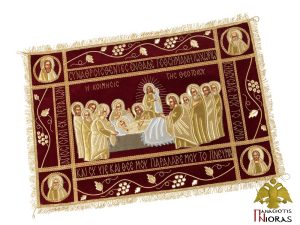
Epitaphios Cover Dormition of Theotokos With Golden Thread Full Embroidery 50x70cm
SKU: 6552-10Dormition $893.74
Εpitaphios or epitaphion is a very important representation in our Greek Orthodox Religion. Today most often found as a large cloth, embroidered and often richly adorned, which is used during the services of Great Friday and Holy Saturday in the Eastern Orthodox Churches and those Eastern Catholic Churches which follow the Byzantine rite.
The icon depicts Christ after he has been removed from the cross, lying supine, as his body is being prepared for burial. The scene is taken from the Gospel of St. John (John 19:38-42). Shown around him, and mourning his death, may be his mother (the Theotokos
Epitaphios Cover Dormition of Theotokos With Golden Thread Full Embroidery 70x90cm
SKU: 6552-20Dormition $958.26
Εpitaphios or epitaphion is a very important representation in our Greek Orthodox Religion. Today most often found as a large cloth, embroidered and often richly adorned, which is used during the services of Great Friday and Holy Saturday in the Eastern Orthodox Churches and those Eastern Catholic Churches which follow the Byzantine rite.
The icon depicts Christ after he has been removed from the cross, lying supine, as his body is being prepared for burial. The scene is taken from the Gospel of St. John (John 19:38-42). Shown around him, and mourning his death, may be his mother (the Theotokos
Search
Filter by price
Product categories
- Byzantine Icons (2923)
- BeesWax and Incense Icons (14)
- Byzantine Aluminium Icons (98)
- Byzantine Silver Plated Icons (91)
- Framed Glass Holy Icons (37)
- Hand Carved Icons (5)
- Hand Made Enamel Icons (71)
- Hand Made Icons of Christ (53)
- Hand Made Icons of Holy Virgin Mary (103)
- Hand Made Icons of Saints (222)
- Hand Painted Byzantine Icons (53)
- Hand Painted Icons Special Orders (128)
- Icon Display Stands (34)
- Iconostasis with Electric Lamp (60)
- Laminated Holy Icons (81)
- Mosaic Hand Made Holy Icons (12)
- Orthodox Annual Agiologion (4)
- Orthodox Crystal & Glass Icons (16)
- Orthodox Pin Button Icons (6)
- Silver Byzantine Icons (317)
- No.1055 (12)
- No.1057 Size: 34.5 x 42cm (13)
- No.1058 Size:31x35cm (6)
- No.1060 Size: 26.5cm x 33cm (12)
- No.1062 Size: 24cm x 28cm (28)
- Theotokos (7)
- Various Themes (21)
- No.1064 Size: 21 x 26cm (5)
- No.1065 Size: 25cm x 31cm (15)
- No.1068 Size:22x27cm (3)
- No.1073 Size: 23cm x 27cm (33)
- No.1075 Size : 19cm x 24cm (27)
- No.1078 Size: 16cm x 22cm (90)
- No.1082 Size: 14cm x 18cm (12)
- No.1083 Size: 13cm x 16cm (55)
- No.M1183 Size: 14.5 x 11.5cm (6)
- Silver Classical Collection Icons (4)
- Wedding Crowns & Cases (42)
- Wooden Antique Style Icons (292)
- Wooden Byzantine Icons (783)
- Archangels & Various Themes (56)
- Christ (123)
- Holy Apostle Icons (45)
- Museum Themes (29)
- Prophet Icons (19)
- Saints Female (118)
- Saints Male (283)
- Theotokos (109)
- Wooden Plain Byzantine Icons (1)
- Wooden Diptychs & Triptychs (112)
- Wooden Iconostasis (20)
- Wooden Icons with Glass Oil Cup (17)
- Wooden NeoClassical Icons (194)
- Wooden Russian Style Icons (55)
- Candle Stands (191)
- Cemetery Funeral Products (275)
- Cemetery Alouminum Cross (79)
- Cemetery Candles (27)
- Cemetery Memorial Cross (18)
- Cemetery Memorial Frames (22)
- Cemetery Memorial Incense Burners (20)
- Cemetery Memorial Oil Candles (57)
- Cemetery Memorial Porcelain Fotos (2)
- Cemetery Memorial Steel Boxes (9)
- Cemetery Memorial Vases (27)
- Wooden Koliva Trays (14)
- Church Supplies (1237)
- Andidoron Bowls (42)
- Anointing Oil Bottles (17)
- Baptismal Fonts (15)
- Candelabra Ventilated (17)
- Candle Cases & Coin Boxes (41)
- Cement ReadyMade Church (4)
- Chains and Gift Boxes for Englolpion Sets (13)
- Chanter Psalter Stands (31)
- Cherubims Exapterigo (33)
- Church Candle Recycle Box (4)
- Church Chairs & Throns (6)
- Church Corridor Columns (18)
- Church Orthodox Bells (29)
- Church Supplies upon Request (10)
- Crosiers - Bishop Stuff (13)
- Ecclesiastical Alouminium Chandelier (21)
- Ecclesiastical Candelabrum (62)
- Ecclesiastical Censers (77)
- Ecclesiastical Electric Lamps (8)
- Ecclesiastical Icon Stands (35)
- Ecclesiastical Lanterns (10)
- Ecclesiastical Special Cases (7)
- Ecclesiastical Vase (7)
- Ecclesiastical Vigil Oil Candles (50)
- Ecclesiastical Zeon & Sprinkler (28)
- Engolpion Panagia Sets (22)
- Epitaph Kouvouklion (8)
- Holy Apostle Cover (8)
- Holy Communion Chalice Set (67)
- Holy Communion Wine (7)
- Holy Gospel Book Covers (47)
- Holy Oil Bowls (15)
- Holy Table Oil Candles (34)
- Holy Table Tabernacle (44)
- Lances - Spears for Holy Communion (42)
- Monastic Talanton (8)
- Orthodox Church Sconces (9)
- Orthodox Gospel Metal Stands (8)
- Ostrich Orthodox Decorated Egg (2)
- Pectoral Crosses (146)
- Reliquaries Boxes (37)
- Tables for Church (5)
- WoodCarved Candelabrum (92)
- WoodCarved Chairs - Stalls (30)
- Ex-Voto Tamata Milagros (210)
- ExVoto Alouminium (37)
- ExVoto Aluminium Golden (18)
- ExVoto Candles (2)
- ExVoto Gold K9 (35)
- ExVoto Gold Plated (28)
- ExVoto Nickel Plated (28)
- ExVoto Silver 925 (50)
- ExVoto Special Orders (12)
- Incense Burners & Orthodox Incense (458)
- Alouminium Incense Burners (22)
- Ceramic Incense Burners (25)
- Holy Oil Frangrance (46)
- Home Brass Incense Burners (124)
- Incense Athonite (45)
- Incense Coal (11)
- Incense Incesco Catholic (9)
- Incense Metal Boxes (37)
- Incense Natural & Resins (15)
- Incense Orthodox (48)
- Incense Premium Athonite (46)
- Incense Wooden boxes (18)
- Metal Tongs for Incense (3)
- Porcelain Incense Burners (12)
- Orthodox CD & Book Library (460)
- Byzantine Music CDs (92)
- Christian Bookmarks (25)
- Orthodox Books English Titles (145)
- Children Orthodox Books (4)
- Cook Books (3)
- Iconography (3)
- Orthodox Church Life (20)
- Orthodox Fathers & Sisters (45)
- Orthodox Literature (11)
- Orthodox Theology (22)
- Pilgrimage (5)
- Social Issues (32)
- Orthodox Books French Titles (3)
- Orthodox Books German Titles (21)
- Orthodox Books Greek Titles (174)
- Children's Books (8)
- Divine Liturgy (22)
- General (37)
- Iconography (4)
- Orthodox Saints Supplication Miracles Sequences (99)
- Various Orthodox Prints (4)
- Orthodox Crosses (300)
- BeesWax and Incense Crosses (6)
- Blessing Crosses (80)
- Christ and Theotokos Corpus Images (34)
- Crosses from Blown Glass (25)
- Crosses with Hagiography (16)
- Household Crosses (24)
- Silver 925 Crosses (4)
- Wooden Crosses (111)
- Orthodox Gifts (1249)
- 2026 Collection Paschal & Church Candles (146)
- Kids Pascha Lampada (2)
- Orthodox Church Candles (13)
- Orthodox Pascha Lampada (38)
- Paschal Colored Lampada (97)
- Aladdin Lamps (10)
- Bookmarks (0)
- Ceramic & Crystal Gifts (4)
- Easter Coloring Dye for Eggs (6)
- Ecclesiastical Colognes (15)
- Gifts for the New Year (50)
- Gold Eye Pentants (40)
- Holy Water Bottles (29)
- Key Rings (56)
- Lanterns (2)
- Martirika (29)
- Orthodox Calendars (21)
- Orthodox Car & Gifts Pendants (76)
- Orthodox Cross Gold K14 (32)
- Orthodox Filakto (108)
- Orthodox Icons Magnets (108)
- Orthodox Neckwear Crosses & Icons (29)
- Orthodox Silver 925 Rings (23)
- Praying Ropes (93)
- Praying Rozaries (7)
- Prosphora Seals (30)
- Silver 925 Car Medallions (18)
- Silver 925 Chains (31)
- Silver 925 Orthodox Crosses (158)
- Silver 925 Orthodox Pendants (23)
- Silver 925 Russian Crosses (0)
- Small Gospel Pendants (13)
- Traditional Blue Eyes (10)
- Silver Blue Eyes (10)
- Small Blue Eyes (0)
- Various Small Icons (46)
- Wax Healing Creams (8)
- Wooden NeckWear Crosses (27)
- 2026 Collection Paschal & Church Candles (146)
- Vestments, Traditional Costumes & Church Linens (499)
- Baptism Clothing (1)
- Clerics Hats (8)
- Covers Of The Holy Grail (13)
- Ecclesiastical Ribbons (26)
- Epitaph Cover Koimesis (21)
- Epitaph Covers Mourners (56)
- Holy Communion Cup Covers (22)
- Holy Communion Purificators & Accessories (21)
- Iconostasis Orthodox Cover (10)
- Orthodox Antimension (17)
- Orthodox Belts (9)
- Orthodox Cotton Cases and More (16)
- Orthodox Cufflinks (16)
- Orthodox Flags & Banners (59)
- Orthodox Greek Flag With Holy Icons (67)
- Rassa - Anteri (10)
- Shroud (9)
- Velvet Orthodox Garment & Prayers (37)
- Vestment Embroidery Derocations (31)
- Vestment Fabrics (40)
- Vestments for Altar Boy (10)
- Vigil Oil Candles (938)
- Brackets for Oil Candles (29)
- Cross Carved Glass Cups (96)
- Cross Carved Glass Cups - Louserna (41)
- Hanging Oil Candles (253)
- Metal Lid Cups (6)
- Oil for Candles (5)
- Replacements Glass Cups (56)
- Replacements Glass Cups for Electric Use (5)
- Replacements Glass Shades (15)
- Standing Oil Candles (391)
- Wicks and Floats For Oil Candles (41)


More
More
- Byzantine Icons
- BeesWax and Incense Icons
- Byzantine Aluminium Icons
- Byzantine Silver Plated Icons
- Framed Glass Holy Icons
- Hand Carved Icons
- Hand Made Enamel Icons
- Hand Made Icons of Christ
- Hand Made Icons of Holy Virgin Mary
- Hand Made Icons of Saints
- Hand Painted Byzantine Icons
- Hand Painted Icons Special Orders
- Icon Display Stands
- Iconostasis with Electric Lamp
- Laminated Holy Icons
- Orthodox Annual Agiologion
- Orthodox Crystal & Glass Icons
- Orthodox Pin Button Icons
- Silver Byzantine Icons
- No.1055
- No.1057 Size: 34.5 x 42cm
- No.1058 Size:31x35cm
- No.1060 Size: 26.5cm x 33cm
- No.1062 Size: 24cm x 28cm
- No.1064 Size: 21 x 26cm
- No.1065 Size: 25cm x 31cm
- No.1068 Size:22x27cm
- No.1073 Size: 23cm x 27cm
- No.1075 Size : 19cm x 24cm
- No.1078 Size: 16cm x 22cm
- No.1082 Size: 14cm x 18cm
- No.1083 Size: 13cm x 16cm
- No.M1183 Size: 14.5 x 11.5cm
- Silver Classical Collection Icons
- Wedding Crowns & Cases
- Wooden Antique Style Icons
- Wooden Byzantine Icons
- Wooden Diptychs & Triptychs
- Wooden Iconostasis
- Wooden Icons with Glass Oil Cup
- Wooden NeoClassical Icons
- Wooden Russian Style Icons
- Mosaic Hand Made Holy Icons
- Candle Stands
- Cemetery Funeral Products
- Church Supplies
- Andidoron Bowls
- Anointing Oil Bottles
- Baptismal Fonts
- Candelabra Ventilated
- Candle Cases & Coin Boxes
- Cement ReadyMade Church
- Chains and Gift Boxes for Englolpion Sets
- Chanter Psalter Stands
- Cherubims Exapterigo
- Church Candle Recycle Box
- Church Chairs & Throns
- Church Corridor Columns
- Church Orthodox Bells
- Church Supplies upon Request
- Crosiers – Bishop Stuff
- Ecclesiastical Alouminium Chandelier
- Ecclesiastical Candelabrum
- Ecclesiastical Censers
- Ecclesiastical Icon Stands
- Ecclesiastical Lanterns
- Ecclesiastical Special Cases
- Ecclesiastical Vase
- Ecclesiastical Vigil Oil Candles
- Ecclesiastical Zeon & Sprinkler
- Engolpion Panagia Sets
- Epitaph Kouvouklion
- Holy Apostle Cover
- Holy Communion Chalice Set
- Holy Communion Wine
- Holy Gospel Book Covers
- Holy Oil Bowls
- Holy Table Oil Candles
- Holy Table Tabernacle
- Lances – Spears for Holy Communion
- Monastic Talanton
- Orthodox Church Sconces
- Orthodox Gospel Metal Stands
- Ostrich Orthodox Decorated Egg
- Pectoral Crosses
- Reliquaries Boxes
- Tables for Church
- WoodCarved Candelabrum
- WoodCarved Chairs – Stalls
- Ecclesiastical Electric Lamps
- Ex-Voto Tamata Milagros
- Incense Burners & Orthodox Incense
- Alouminium Incense Burners
- Ceramic Incense Burners
- Holy Oil Frangrance
- Home Brass Incense Burners
- Incense Athonite
- Incense Coal
- Incense Incesco Catholic
- Incense Metal Boxes
- Incense Natural & Resins
- Incense Orthodox
- Incense Premium Athonite
- Incense Wooden boxes
- Metal Tongs for Incense
- Porcelain Incense Burners
- Orthodox CD & Book Library
- Orthodox Crosses
- Orthodox Gifts
- Gifts for the New Year
- 2024 Paschal & Church Candles
- Orthodox Calendars
- Aladdin Lamps
- Bookmarks
- Ceramic & Crystal Gifts
- Easter Coloring Dye for Eggs
- Ecclesiastical Colognes
- Gold Eye Pentants
- Holy Water Bottles
- Key Rings
- Lanterns
- Martirika
- Orthodox Car & Gifts Pendants
- Orthodox Cross Gold K14
- Orthodox Filakto
- Orthodox Icons Magnets
- Orthodox Neckwear Crosses & Icons
- Praying Ropes
- Praying Rozaries
- Prosphora Seals
- Silver 925 Car Medallions
- Silver 925 Chains
- Silver 925 Orthodox Crosses
- Silver 925 Orthodox Pendants
- Orthodox Silver 925 Rings
- Silver 925 Russian Crosses
- Small Gospel Pendants
- Traditional Blue Eyes
- Various Small Icons
- Wax Healing Creams
- Wooden NeckWear Crosses
- Vestments, Traditional Costumes & Church Linens
- Baptism Clothing
- Clerics Hats
- Covers Of The Holy Grail
- Ecclesiastical Ribbons
- Epitaph Cover Koimesis
- Epitaph Covers Mourners
- Holy Communion Cup Covers
- Holy Communion Purificators & Accessories
- Iconostasis Orthodox Cover
- Orthodox Antimension
- Orthodox Belts
- Orthodox Cotton Cases and More
- Orthodox Cufflinks
- Orthodox Flags & Banners
- Orthodox Greek Flag With Holy Icons
- Rassa – Anteri
- Shroud
- Velvet Orthodox Garment & Prayers
- Vestment Embroidery Derocations
- Vestment Fabrics
- Vestments for Altar Boy
- Vigil Oil Candles